AI Secret Admirer Contradictory Clues: Fix the Story
A changed ink color need not become a new suspect. Separate what the scene established from what a character claims, then choose what to keep.

On this page
Pause before naming a second admirer
AI secret admirer contradictory clues can tempt you to make every mismatch meaningful. The first note used blue ink; a later reply calls it green. You invent a second writer to explain the change, then need another explanation when the place changes too. Before expanding the cast, decide whether the detail is a useful twist or simply a version of the scene you do not want to keep.
A contradiction has two possible jobs: it can change the story, or it can be a detail you ask to correct. Pick one before adding another suspect. The original adult-fiction example below keeps the object separate from the explanation of who left it.
Keep facts and explanations apart
- Established in the scene: an ivory envelope with blue handwriting was left at a fictional gallery reception.
- A character's claim: the writer says the note came from the café across the street. That explanation can be questioned inside the fiction.
- Still unanswered: who wrote it, and why they chose this recipient. A familiar ink color alone does not settle either question.
A list like this needs only the details that matter. Recording every adjective turns a short mystery into clerical work. If the recipient never examined the handwriting, mark it unknown rather than treating a narrator's decorative sentence as evidence the character has seen. The identity guide explains the related difference between reader knowledge and character knowledge.
Choose between correction and a new twist
In this original fictional scene, both adults are over 25. The gallery note is established as blue, but the admirer later refers to a green note. You have two reasonable writing choices. Keep a single blue note and correct its color, or deliberately introduce a second object. The second choice adds a question that the story must eventually address; it is not automatically the more interesting choice.
A short correction could be: “For continuity, keep the gallery envelope and its blue handwriting. No second note has been introduced. The writer's identity is still unknown to my character. Continue from my question about the café.” It fixes the object while leaving the recipient's question and the hidden identity available for the next exchange.
Put stable context where it belongs
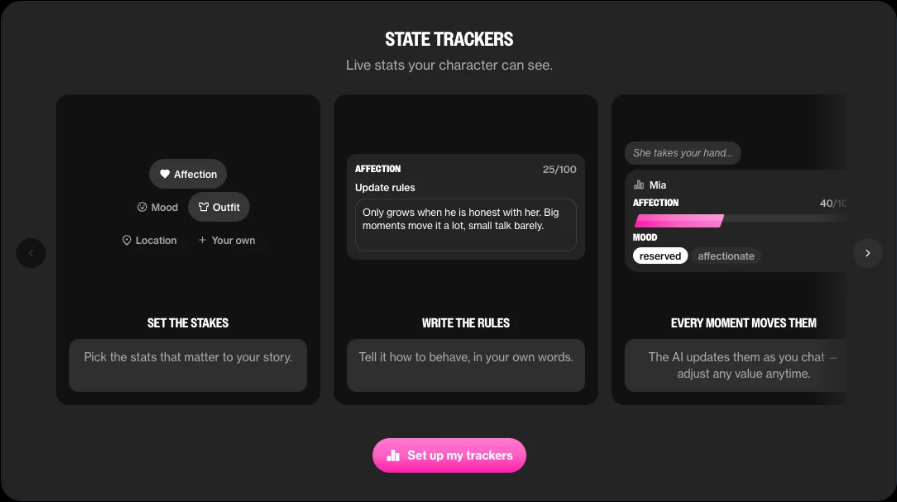
OurDream's public creator guide documents separate Greeting and Scenario fields. It also describes State Trackers, including Location. Public documentation captured on October 11, 2026 supports these field distinctions. The proposed clue correction is original fiction, without a paid-chat test.
Source screenshot
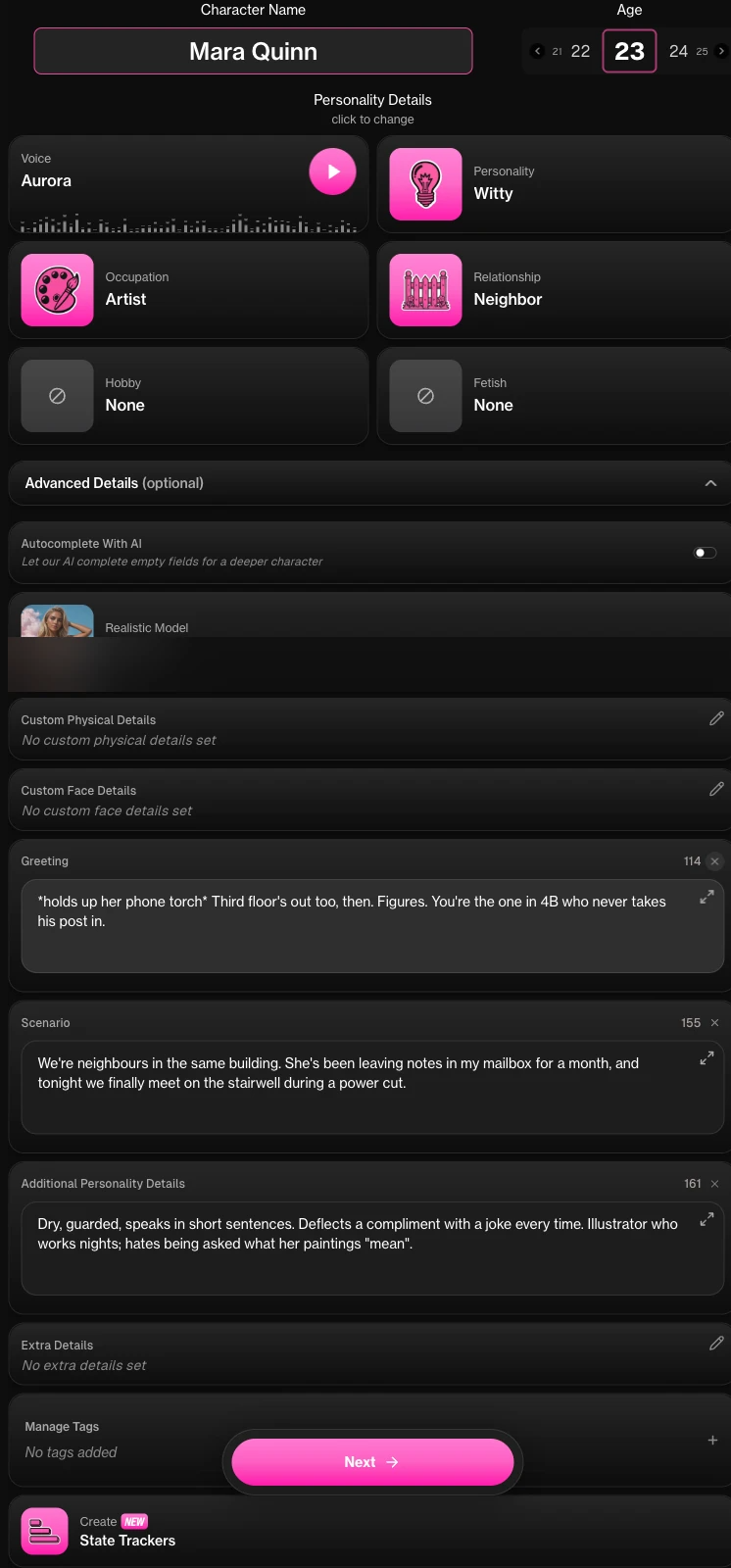
For your own character, keep the few agreed setting facts in the situation rather than repeating a full solution in every opening. In an existing public character's chat, a recap remains a conversational request; it does not rewrite that character's source description. Our link and scene explanation helps separate those actions before you decide where to continue.
Source screenshot
Read the next reply before adding more evidence
After a correction, look for the one thing you asked to preserve. Does the next reply keep the blue note? Does it answer the café question without deciding that your character now knows the writer? A different answer may still be enjoyable, but choose to accept it rather than silently changing what counts as a clue.
If the reply repeats the conflict, shorten the next correction to the exact detail. Do not add a second suspect, a secret twin and a forged letter merely to defend an explanation you never wanted. If repeated repairs become more work than the story, stop the puzzle or switch to a mystery about motive, where a visible identity is less disruptive.
A mystery can stay small
The masquerade scene offers a different fictional setting. Take one object and one unanswered question from your chosen premise, then let the conversation develop. A single consistent clue can give the recipient something to ask about; a dozen unresolved objects are not evidence of a deeper plot.
Use improvised chat if you enjoy choosing which version becomes part of the story. If you want to solve a fair mystery whose answer was fixed before you began, use authored fiction with a checked solution. Creator fields, a recap and a confident response do not supply that guarantee. Decide what kind of experience you want before investing in a longer chain of clues.
Questions before you start
Is every contradiction a deliberate clue?
No. You can adopt a contradiction as an authored twist, but a generated reply alone does not establish intention. Decide whether it improves the story before building an explanation around it.
What belongs in the clue list?
Keep a few established details and separate unconfirmed statements. In the example, an envelope's visible color is a scene detail; a character's explanation of its origin is a claim.
Can I correct the scene without revealing the writer?
Yes as a writing choice: restate the conflicting object or event while leaving authorship undecided. That does not guarantee the next model reply will preserve the distinction.
Do State Trackers solve this automatically?
The reviewed guide describes scene-related tracker fields. It does not establish a native secret-admirer clue checker or spoiler lock. Do not treat an interface value as independent proof of the fictional solution.
When is a fixed story a better choice?
Choose a fixed story when discovering one prewritten, fair solution matters most. Improvised chat is a weaker fit for a puzzle that requires every clue to have one stable explanation.