
AI Secret Admirer Identity Reveal: Who Knows?
A visible profile name and an unsigned note can coexist. Decide whose identity is hidden, when it should emerge, and whether AI chat suits the mystery you want.

Who is supposed to be surprised?
You open a character called Mara. The first message is signed “Your admirer.” If discovering Mara’s name was the whole attraction, the profile has already answered the question. If you enjoy playing someone who has not met her yet, the scene can still work. Choose that distinction before spending time building clues.
- A mystery for you: the visible label, profile description and opening must leave the identity unknown. Read those surfaces before choosing.
- A mystery for your fictional character: you know the name, but the person you play learns it later. Keep their knowledge separate from yours.
- A mystery about the motive: the name is known from the beginning; the unanswered question is why this person left the note.
An improvising chat also differs from a puzzle with a fixed solution. If neither of you has chosen the admirer’s identity, each new clue helps invent the answer. That can be enjoyable, but it does not give you an existing secret to solve. If discovering a predetermined answer matters most, choose an authored mystery rather than expecting an unverified AI mode to provide one.
Our note-reveal guide explains the separate experience on this site: an authored sample leads to a supplied public profile. Its staged envelope is not a setting installed in the partner chat.
A name field is different from an unsigned greeting
When creating a fictional adult admirer, decide what the reader may see before deciding what the character may say. An alias such as “Blue Ink” can be a useful label if the creator permits it. It still needs a clear adult identity behind it. Do not assume changing the greeting also changes the profile name, description or other visible labels.
OurDream’s official character guide documents a Character Name field separately from the Greeting and Scenario fields in Advanced Details. That distinction supports checking them separately. The guide does not establish that an unsigned greeting conceals a character’s name everywhere in the interface.
Lovescape’s character help page describes traits, sample conversation, your role and ongoing context as influences on replies. Those are tools for shaping a fictional character. They are not documentation of a locked secret-identity feature.
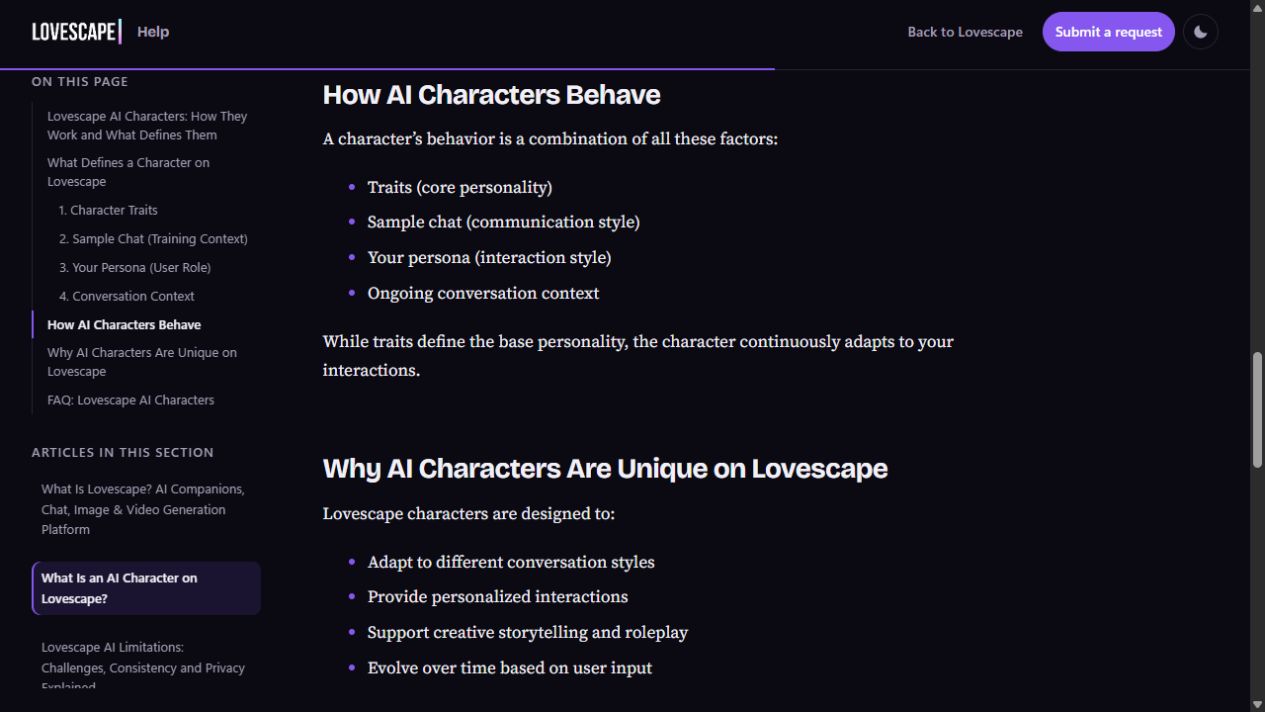
Lovescape’s creator is worth considering when inventing the admirer is part of the pleasure and you are comfortable reading and redirecting the scene. If you want the identity to surprise you, creating the person yourself may defeat that purpose. An existing profile or a fixed story may suit you better. Our character shelf lets you read the supplied premises before choosing a destination.
Give the reveal a moment, not a countdown
Here is an authored example, not a recorded AI response. Two fictional adults, aged 29 and 32, meet at a gallery opening. A visitor finds a card signed “Blue Ink” beside a painting. The note asks which detail made them stop. The admirer’s name remains unknown to the visitor until they ask to meet the writer.
The painting gives both people something to discuss while the signature stays open. A detail about its storm clouds can invite a reply without announcing a name. The reveal has a clear cue: the visitor asks for an introduction. That is easier to recognize than a vague request to remain mysterious for a long time.
- Before the reveal: ask why the writer chose this painting. Check whether the reply discusses the clue without naming the admirer.
- When declining a clue: say you would rather talk about the exhibition. Check whether the conversation can move on without forcing another guess.
- At the reveal: ask to meet the person who wrote the note. Check whether the identity fits the earlier details instead of replacing them.
These are checks for your own conversation, not results we obtained. You can end the scene with the card still unsigned. You can also keep the name known and discover the motive instead. For a different setting, our masquerade fragment uses an unsigned ribbon; the same question applies there: what does the next detail help you understand?
When the name appears too early
First decide whether the reveal actually spoils the part you enjoy. If the answer is yes, correct the scene before adding another clue. Continuing as though nothing happened can leave you uncertain whether the name is now established or still hidden.
One possible correction is: “Outside the story: my character has not learned your name. Continue from the unsigned gallery card, and introduce the writer only when I ask to meet them.” This is original suggested wording. It is not a tested command or a promise that the previous reply disappears.
Lovescape’s memory explanation says that misunderstood or changed details can be corrected in conversation, and that history belongs to each character separately. That supports trying a clarification with the same character. It does not prove that this particular mystery will resume correctly.
Read what happens next. If the reply still uses the name as though your character knows it, you can accept the reveal and shift to the reason for the note. Otherwise, stop and reconsider the setup. Repeating longer instructions is not necessarily a satisfying way to spend the evening. Choose a pace you enjoy, including a short scene with one honest introduction.
The limit to check before paying
A character can retain information and still use it at the wrong moment. Lovescape’s limitations page explicitly acknowledges that older topics may not be recalled and that long conversations can contain inconsistencies. Memory therefore does not establish reliable control over reveal timing.
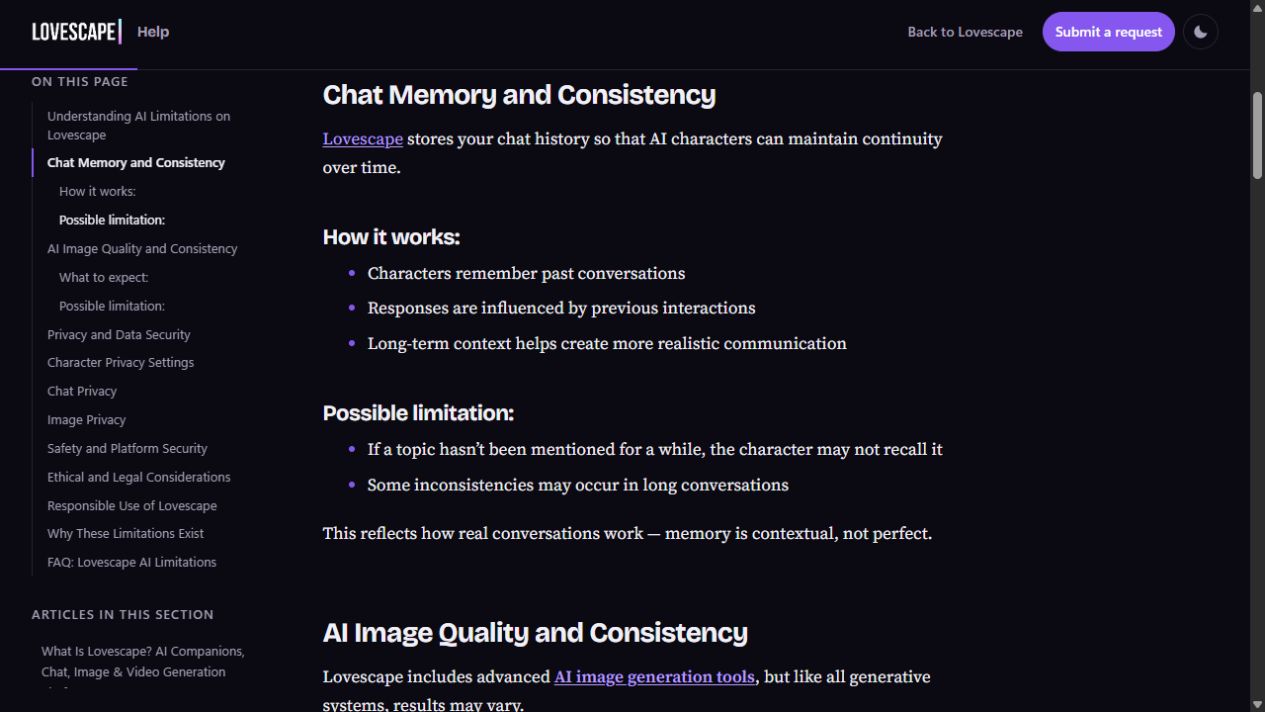
Judge the experience by the thing you came for: an understandable clue, room to decline it, and a reveal that makes sense. Review the provider’s current account requirements, plan and allowances before paying. We have not verified a separate mystery mode, a hidden-name switch or a purchase that makes this pacing reliable.
Skip AI chat for this purpose if you need a fixed solution with no accidental spoilers or do not enjoy correcting the story. It is a better fit for an adult who wants to collaborate on fiction and can accept occasional drift. An anonymous signature in that fiction also tells you nothing about anonymous account access; this guide does not assess that.
Sources and method
Prepared by the AI Secret Admirer editorial desk. Official OurDream and Lovescape pages linked above were checked on October 2, 2026. This is a document-based guide, not an account or paid-use test. The gallery scene and correction are our authored examples. Search results informed the question; they were not used to estimate popularity or prove partner features.
Questions before you start
Can a chat instruction hide the name on a profile?
A story instruction is not evidence of an interface setting. If the profile already displays a name, assume you can still see it. Check the creator and the actual chat screen rather than expecting the conversation to conceal a visible label.
Does knowing the name ruin a secret-admirer story?
Only if guessing the identity is the part you wanted. You can know the name as the reader while your fictional character does not. Alternatively, let the mystery concern why the note was sent or which earlier fictional encounter it refers to.
Should I leave the admirer’s identity undecided?
That suits improvisation, where you choose an answer together. It is a poor fit for a fair guessing game: an undecided identity gives the clues no fixed answer to point toward. Choose which kind of story you want before treating a detail as evidence.
What if the first reply reveals the identity?
Decide whether you want to keep that reveal. If you do, move to the motive behind the note. If you do not, clarify that the name is not known inside the scene and restate the reveal cue. Read the next response; a correction is a request, not a guaranteed rollback.
Does long-term memory guarantee a delayed reveal?
No. Remembering a fictional identity and withholding it until the right moment are different requirements. Lovescape’s help page acknowledges inconsistencies in long conversations. Use an agreed cue and check the replies, rather than treating memory as a spoiler lock.